A breakthrough came in 1921 with the commercial availability of titanium white, offering a safer alternative to lead white. Today, the correct blend of zinc and titanium white can provide nearly identical performance without the associated health risks.
By Brouns & Co
24 July 2024
⊕ 5 min read
Key Dates
1
Centuries — Linseed oil paint made with arsenic, cobalt, lead and copper pigments
2
1830 P.F. Tingry records lead white production
3
1921 Titanium white becomes commercially available
4
1970s Europe discontinues lead paint
In this article
What most people call lead paint was, for centuries, simply linseed oil paint with a lead pigment ground into it. Its history explains both why it performed so well and why it had to go.
What is lead paint?
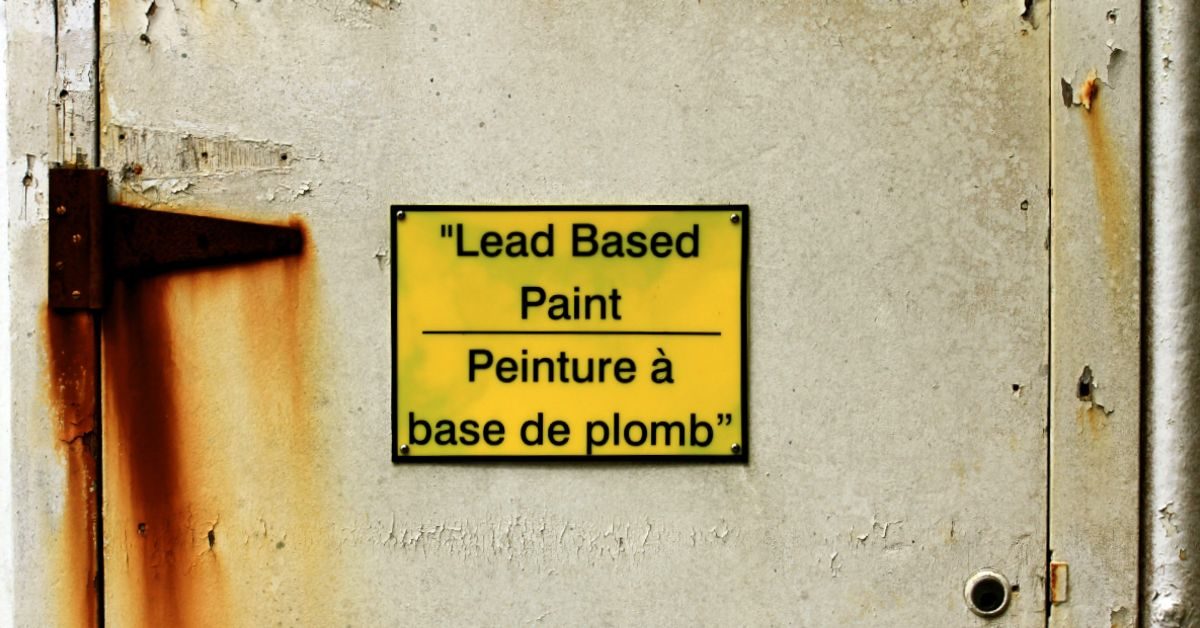
Lead paint, as it is commonly known, is linseed oil paint mixed with white or red lead pigment. Variations of linseed oil paint have been used for centuries with heavy-metal pigments such as arsenic, cobalt, lead and copper. Despite their exceptional performance, these pigments are notoriously toxic.
How was lead white made?
Detailed accounts of lead white production survive in period publications, including “The Painter’s and Colourman’s Complete Guide” of 1830 by P.F. Tingry:
“Sheets of lead about two feet long, five inches broad and a quarter of an inch thick, are rolled up in loose coils, and placed in earthen pots… The pots are then buried in fresh stable litter, where they remain for about two months, during which time the vapours of the vinegar, elevated by the heat of the dung, oxidize the surface of the lead… It was formerly ground dry, by which method, from its deleterious nature, the workmen suffered severely.”
When did lead paint stop being used?
Awareness of lead’s harmful effects dates back centuries, yet its use persisted until relatively recently. Europe discontinued lead paint in the 1970s, and the USA in the 1980s.
What replaced lead white?
A breakthrough came in 1921 with the commercial availability of titanium white, a safer alternative to lead white. Lead white had exceptional efficacy as a pigment, but its toxicity remained a significant concern.
Today, the correct blend of zinc and titanium white can provide nearly identical performance without the associated health risks.