


Plastic-free
About Linseed Oil Paint
Linseed oil paint changes the way you think about protecting a building.
Rather than creating a plastic film over the surface that can eventually crack, flake, and peel, linseed oil paint penetrates and works with the material beneath. Made from flax-derived linseed oil and mineral pigments, it provides exceptional coverage, remarkable depth of color, and a finish designed to be maintained rather than repeatedly stripped and repainted.
PROJECT HIGHLIGHT
St. George Greek Orthodox Cathedral, PA
Color: Cambridge No 7
What is linseed oil paint made from?
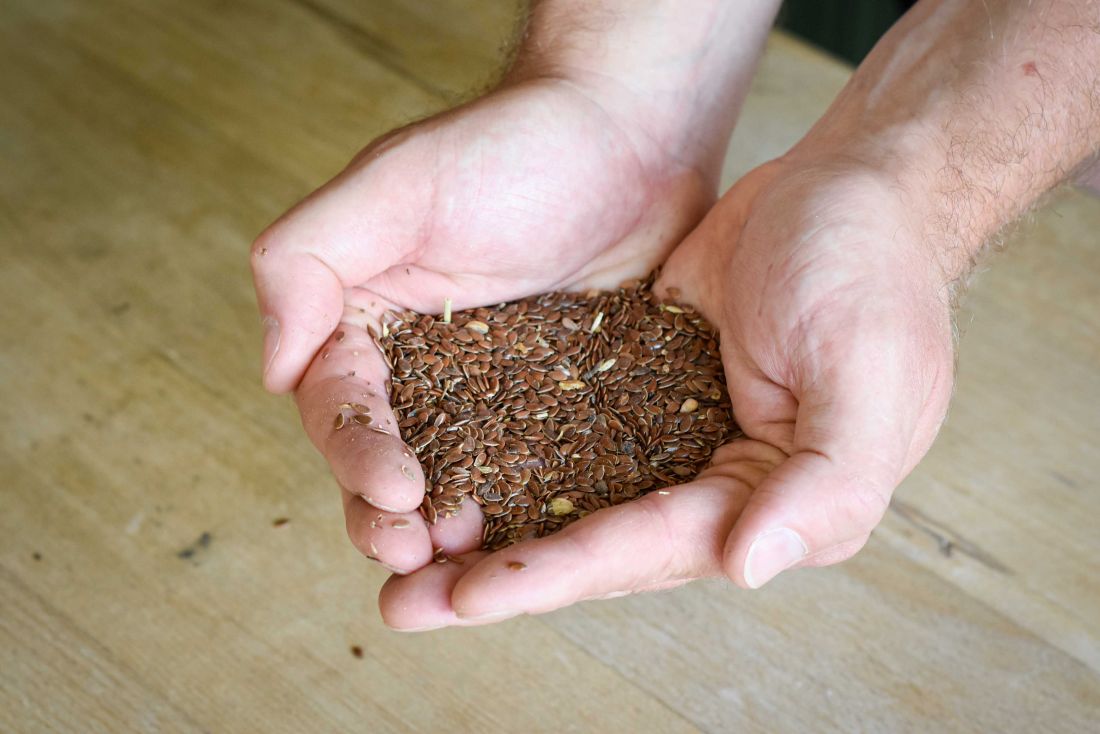
It starts with flax.
Flax seed is pressed to produce raw linseed oil, which is then carefully boiled—a traditional process that helps the oil cure faster and creates the durable foundation of our linseed oil paint.
Mineral pigments are then worked into the boiled linseed oil, along with a small amount of drying agent to assist the curing process.
That’s essentially it. No acrylic or plastic binders, synthetic emulsifiers, or unnecessary fillers.
At Brouns & Co, we take this simplicity even further. Our flax is grown close to our production facility in Yorkshire, and every batch of paint is carefully manufactured using traditional triple-roll milling.
How long has linseed oil paint been used?
For centuries.
Linseed oil has a long history as a protective coating and paint binder, particularly across Scandinavia and Northern Europe, where it was widely used on timber buildings, windows, doors, and architectural details.
Historic buildings provide remarkable evidence of how successfully linseed oil paint can work with traditional building materials over very long periods.
This isn’t a new technology attempting to recreate an old idea. It is a traditional paint system that has already had centuries to prove itself.
How does linseed oil paint work?
The difference is in the way it interacts with the surface.
Rather than simply forming a coating over timber, linseed oil penetrates into the wood. This helps protect and nourish the material while allowing moisture to move through it instead of becoming trapped beneath an impermeable plastic film.
That moisture movement is particularly important for traditional timber. When wood can release moisture, it has the opportunity to dry naturally.
It’s a beautifully simple principle—and one of the reasons linseed oil paint is so well suited to historic and traditional buildings.
Does linseed oil paint provide good protection?
Absolutely. Protection is one of the reasons linseed oil paint has been used for centuries.
On timber, its moisture-wicking characteristics help the wood manage changes in humidity rather than sealing moisture beneath a plastic film. Instead of trying to isolate the building material from its environment, linseed oil paint works with it.
It's a beautifully simple principle — and one of the reasons linseed oil paint is so well suited to historic and traditional buildings.

What can you paint with linseed oil paint?
A surprisingly wide variety of surfaces.
Depending on the substrate, preparation, and appropriate primer system, linseed oil paint can be used on:
- Timber and siding
- Windows and doors
- Exterior joinery
- Iron and metalwork
- Masonry
- Plaster
- Historic architectural details
One paint system can therefore be used across much of a building, simplifying both specification and long-term maintenance.
How do you apply linseed oil paint?
Preparation is everything.
The surface should be clean, sound, dry, and properly prepared before painting. Bare timber and other substrates should be paired with the appropriate linseed oil primer where required.
Then comes the most important rule: apply it thinly.
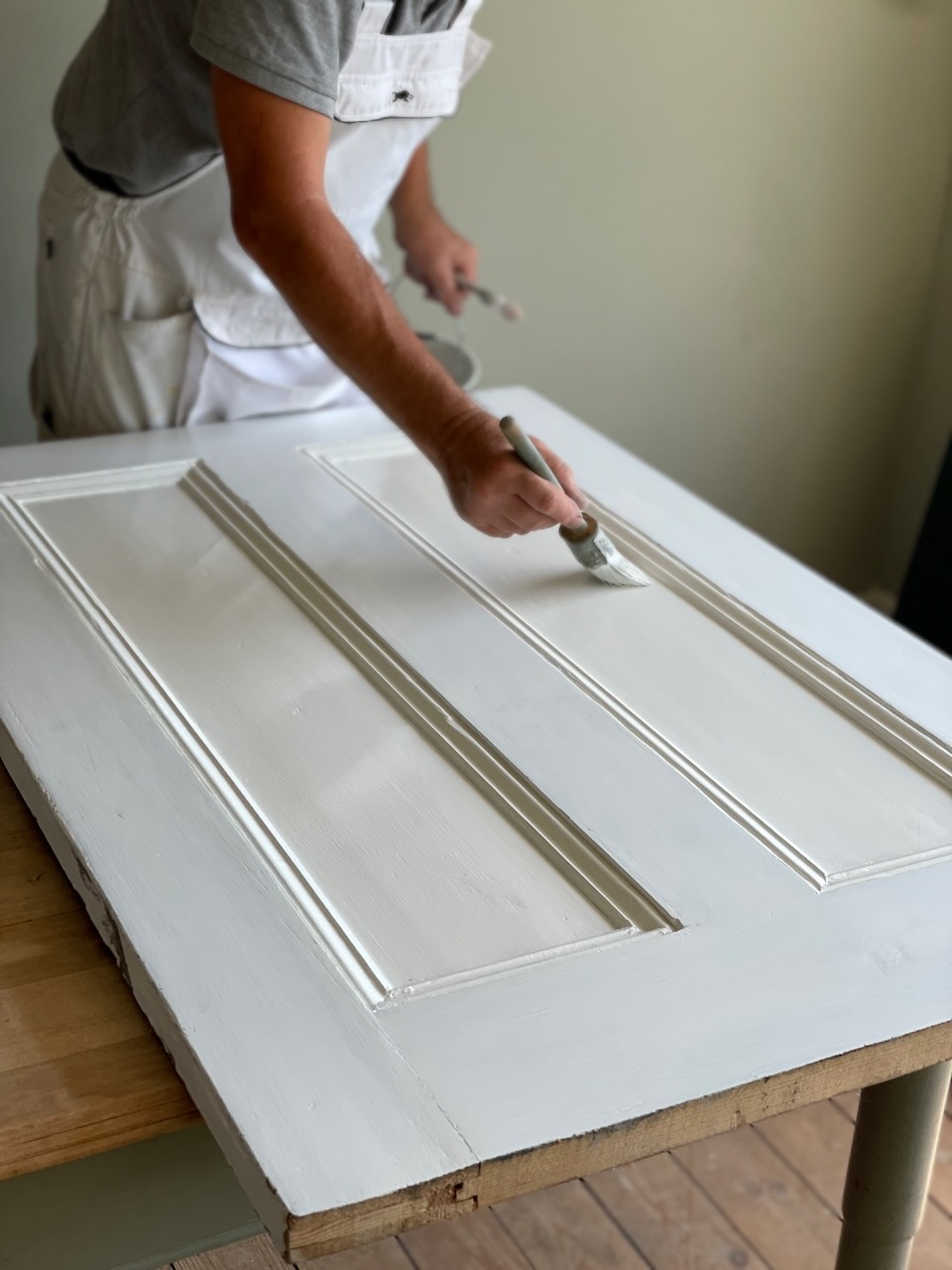
Linseed oil paint is highly concentrated and should be thoroughly brushed into the surface rather than applied in the heavy coats associated with many modern paints.
Allow each coat adequate time to cure before applying the next. Drying time will vary according to temperature, airflow, light, humidity, substrate, and the thickness of the coat.
Thin coats are the key to a beautiful, durable finish.
Does linseed oil paint offer good coverage?
Exceptional coverage is one of its greatest advantages.
Brouns & Co Linseed Oil Paint covers approximately 612–815 ft² per gallon, per coat—up to 2.5× the coverage of many modern paints.
Because the paint is highly concentrated and applied in very thin coats, a relatively small amount can cover a remarkably large surface area.
So when comparing the cost of linseed oil paint with conventional paint, don’t simply compare the price of a gallon. Compare the price per square foot.
Is linseed oil paint expensive?
When considered over the life of the finish, the economics become very different.
First, there is the exceptional coverage. You need considerably less paint to cover the same area.
Then there is maintenance. Instead of waiting for a coating to fail, peel, and require extensive scraping, stripping, priming, and repainting, a linseed oil paint finish can be periodically maintained with boiled linseed oil when appropriate.
That can dramatically reduce the amount of paint, preparation, labor, and waste required over the lifetime of a building.
Which finish of linseed oil paint do I need?
Linseed oil paint keeps things refreshingly simple.
Rather than requiring completely different paint formulations for every architectural surface, the same fundamental paint can be used across numerous substrates when combined with the correct preparation and primer.
The paint naturally develops a beautiful finish with the distinctive depth and subtle sheen created by linseed oil and mineral pigments. Fewer products. A simpler system.
Why is linseed oil paint a more sustainable choice?
It begins with what goes into the can. Our paint is made primarily from flax-derived linseed oil and mineral pigments rather than petrochemical plastic binders.
Our flax is grown close to where our paint is manufactured in Yorkshire, keeping the journey from field to production remarkably short. Every batch is carefully produced using traditional methods, including triple-roll milling, and we avoid plastic in our packaging wherever possible. From flax field to paint can, we believe simplicity matters.
How is Brouns & Co Linseed Oil Paint made?
Once harvested, the flax seeds are pressed to produce raw linseed oil. The oil is then carefully boiled before being combined with our mineral pigments.
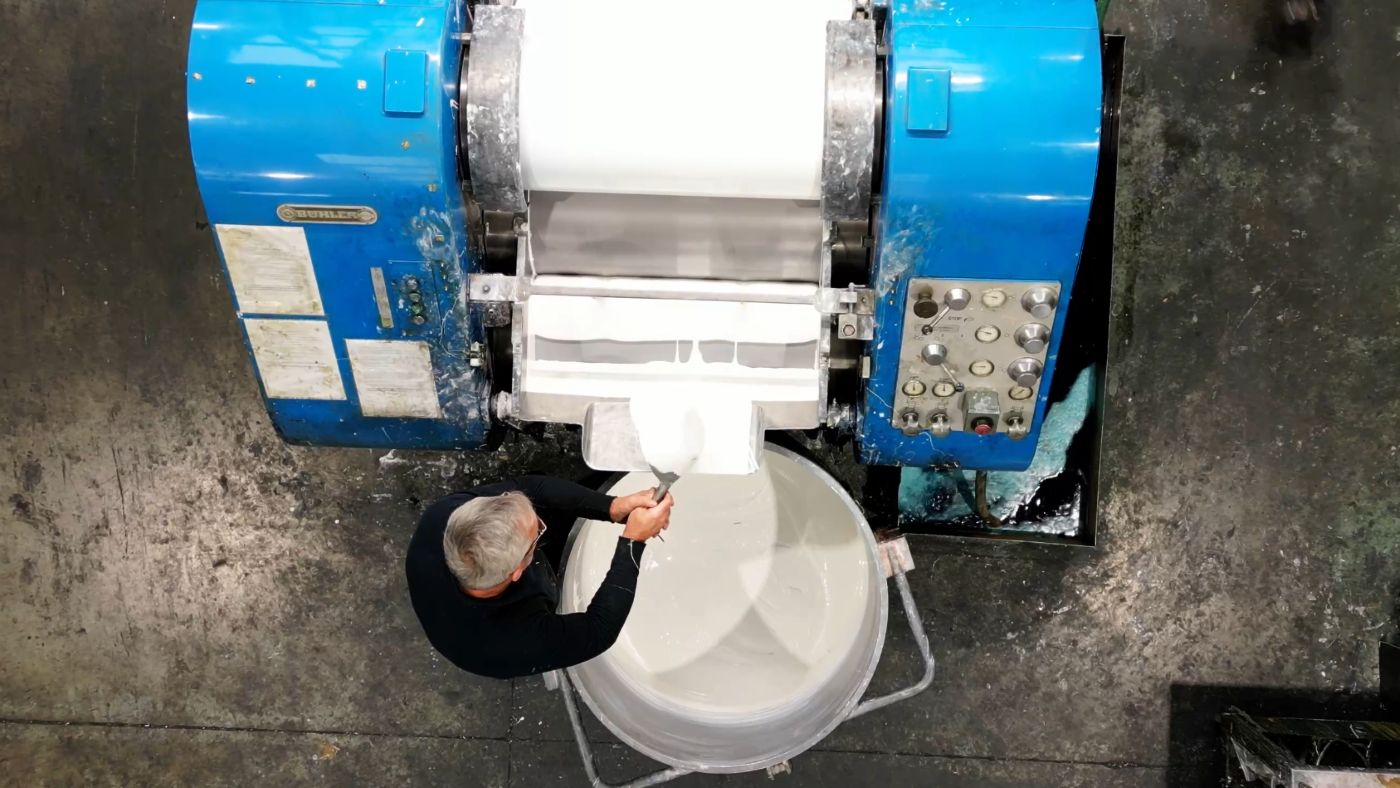
The pigment and oil are initially mixed before the resulting paste is transferred to a traditional triple-roll mill. Depending on the grain size of the pigment, the paint passes through the rollers several times.
This process thoroughly works the pigment into the linseed oil, creating the exceptionally homogeneous consistency and extraordinary depth of color characteristic of our paint.
The principle is centuries old. Before mechanical mills, painters achieved the same fundamental process by grinding pigment and oil together by hand using a muller and stone slab.
We simply have a more precise way of doing it today.
Our process begins in the flax fields of Yorkshire.
Why triple-roll mill the paint?
Because rich, consistent color doesn’t happen by chance.
For linseed oil paint to perform properly, the mineral pigment and oil need to be thoroughly amalgamated. Triple-roll milling repeatedly works the pigment through the oil until an exceptionally smooth and homogeneous paint is achieved.
The rollers are continuously cooled internally with water, helping control the temperature generated by friction and keeping the oil and pigment at the correct consistency throughout the milling process. It takes longer than simply mixing paint in a vat.
But some things shouldn’t be rushed.
What is linseed oil paint like to use?
There is something wonderfully straightforward about working with it.
The paint brushes out into exceptionally thin coats, the mineral pigments create remarkable color depth, and there isn’t the strong solvent smell associated with many traditional solvent-based coatings.
Linseed oil paint rewards careful preparation and good brushwork rather than heavy application.
Once you understand that less really is more, it becomes a very different way of painting.
Does linseed oil paint need maintenance?
Yes—and that is one of its greatest strengths.
As linseed oil paint ages and is exposed to the elements, its surface gradually becomes more matte. Rather than waiting for the coating to deteriorate until extensive preparation and repainting are necessary, the finish can be refreshed with boiled linseed oil when appropriate.
The oil replenishes the surface and helps restore its appearance and protection.
It represents a fundamentally different philosophy of caring for a building:
For centuries, that simple approach helped protect timber, iron, and historic buildings. We believe it still makes just as much sense today.
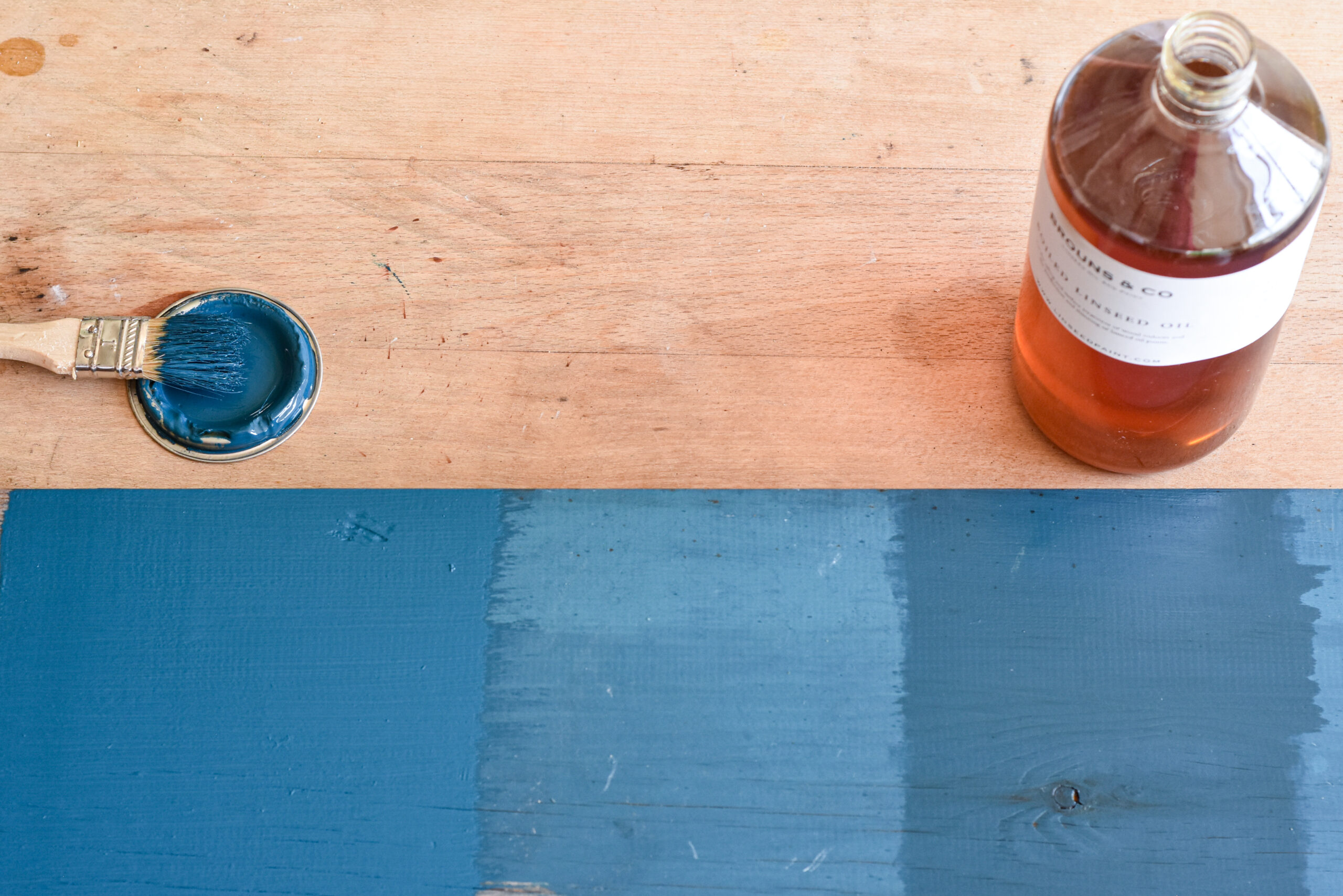
Maintain rather than repaint.